Current Location: Blog >
South Korea server

1.
overview: network characteristics and common risks of kt station group
• kt has multiple backbone nodes in south korea, and the delay distribution is usually between 10-60ms;• a site group usually consists of multiple vps/dedicated servers, and public ip pools and port restrictions require attention;
• common risks: bandwidth burst, tcp half-open connection, dns resolution anomaly, cdn back-to-origin problem;
• monitoring recommendations: use snmp/netflow and delay monitoring, and the traffic sampling period is recommended to be 1 minute;
• alarm threshold example: traffic exceeding 500mbps or pps>500k triggers an advanced alarm.
2.
fault location process and tool list
• step 1: confirm the scope of impact (single machine/subnet/full site group), and group and investigate by ip segment;• step 2: link detection, use mtr/traceroute to confirm the hop count and packet loss rate;
• step 3: host-side monitoring, check top/iostat/netstat/ss output;
• step 4: packet capture analysis, tcpdump -i eth0 -c 20000 host xyzw;
• step 5: upstream verification, check cdn back-to-origin, dns resolution and kt peer alarm records.
3.
host/vps configuration and performance bottleneck examples
• recommended base configuration (example): 4 vcpu / 8gb ram / 100gb nvme / 1gbps port;• performance traps: single-core saturation, high io wait, and large proportion of softirqs;
• network parameter tuning: net.core.somaxconn=1024, net.ipv4.tcp_max_syn_backlog=2048;
• nginx recommendation: worker_processes=auto, worker_connections=4096;
• resource monitoring: when 95% of the time cpu load>number of cores or iowait>30%, expansion or optimization is required.
| host | cpu | memory | port bandwidth | typical traffic |
|---|---|---|---|---|
| vps-kr-01 | 4 vcpus | 8gb | 1gbps | average 120mbps, peak 600mbps |
| vps-kr-02 | 8 vcpus | 16 gb | 2gbps | average 300mbps, peak 1.2gbps |
4.
domain name/cdn/dns faqs and solutions
• dns resolution delays or errors: check ttls and upstream resolver connectivity;• domain name resolution is inconsistent: compare the results returned by authoritative dns and recursive dns;
• cdn return to origin timeout: check the return to origin ip whitelist and firewall policy;
• cache penetration: set appropriate caching rules for dynamic interfaces or use tokens to prevent brushing;
• recommendation: set up secondary back-to-origin and load balancing. the peak cdn bandwidth needs to be estimated to be 130% redundant.
5.
ddos defense strategy and recovery process
• identification characteristics: pps > 200k or traffic sudden increase > 300% in a short period of time are attack indicators;• local protection: use conntrack/iptables speed limit and syn cookies enabled;
• cloud/upstream: contact kt or a third party for cleaning (example cleaning capacity: 10gbps/100mpps);
• drill recommendations: regularly drill back-to-source switching, black hole routing and traffic cleaning switching;
• recovery steps: first cut off abnormal traffic (acl/black hole), then gradually release it and observe the manslaughter rate.
6.
examples of practical commands and log troubleshooting
• check the number of connections: ss -s and ss -tanp | grep syn | wc -l;• packet capture example: tcpdump -nn -s0 -c 10000 -w dump.pcap host 1.2.3.4;
• iptables speed limit example: iptables -a input -p tcp --syn -m limit --limit 50/s --limit-burst 100 -j accept;
• log inspection: /var/log/nginx/access.log counts request peaks by time window;
• performance data reference: in a fault, it was observed that pps increased from 30k to 680k, resulting in softirq accounting for 80%.
7.
real case: a certain kt station group was attacked by syn flood and the recovery process
• background: at 03:10 on 2025-03-12, the station group traffic suddenly increased from an average of 200mbps to 1.6gbps;• impact: connection queue overflow occurred on multiple vpss, and nginx 502/504 errors surged;
• disposal: immediately enable iptables speed limiting and request kt on the cdn side to assist in starting cleaning (10gbps cleaning node);
• recovery: return-to-origin traffic drops to normal within 15 minutes, manslaughter <0.5%, and business gradually recovers;
• lesson: it is recommended to retain at least 1:3 cleaning bandwidth budget and automated switching strategy all year round.
- Latest articles
- Best Practices And Case Studies For Overseas Acceleration Using Alibaba Cloud Singapore CN2
- Security Advice: Best Practices For Daily Maintenance And Permission Management Of Hong Kong Alibaba Cloud Native IP
- Preparation Before Choosing What Common Sales Pitfalls Can Taiwanese Cloud Server Providers Avoid?
- How To Validate Security Assessment Metrics In Malaysia Via VPS Trials
- A Guide To Avoiding Hidden Fees And Billing Traps In Malaysia Cloud Server Price Lists
- CN2 Malaysia Network Optimization Practical Guide For P2P And Cloud Gaming
- Hong Kong CN2 Lingmeng Cloud Node Coverage And Access Performance Test Report
- How To Migrate Business From Domestic To Korean VPS Domestic Hosting: Traffic And Compliance Considerations
- Where Can You Buy Taiwanese Native IPs? Recommended List Suitable For Beginners And Businesses
- Quick Hands-on Guide To Creating Oracle Singapore VPS Instances And Network Configuration
- Popular tags
Warring States: Campaigns Of War
Live Broadcast Server Ranking
High-defense
Live Broadcast Bandwidth
Taiwan Broadband
Taiwanese Registration Cloud Server
Access Frequency Control
Cloud Server Provider
Cloud Server
Server Architecture
Qct
Taiwan Factory
Server Reviews
Website Registration
Server Stability
Server Price
Marketing Strategy
Lightweight Configuration
E-commerce Small Sites
Privacy
Light Compute Cloud
IP Address
Restic
Containerization
Taiwan Native Residential Ip Service Provider
Practical Recommendations
Taiwan Native Server Cluster
10m Server
Use Cases
Price
Related Articles
-
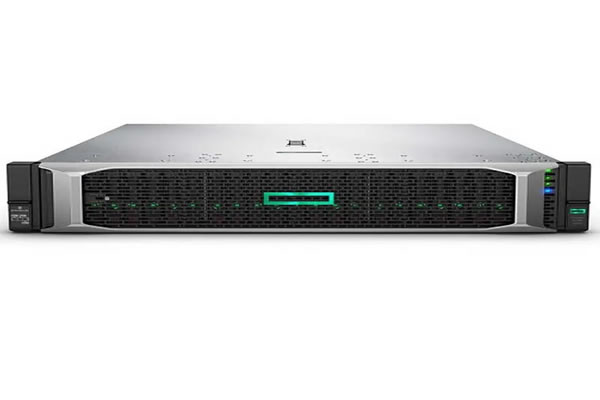
Understand The Configuration And Performance Analysis Of Korean Station Group Servers
this article will provide an in-depth analysis of the configuration and performance analysis of korean website cluster servers to help users understand how to choose the appropriate server and improve the optimization effect of the website. -
Resources To Share Korean Native Ip Building Tutorial Videos
detailed korean native ip building tutorial video resources are shared, providing practical steps and detailed guides to help users easily complete the building. -
How To Optimize Korean Site Group Servers To Improve Search Rankings
this article will introduce how to optimize the korean site group server to improve search rankings and provide relevant servers, vps, hosts and domain names recommendations.